
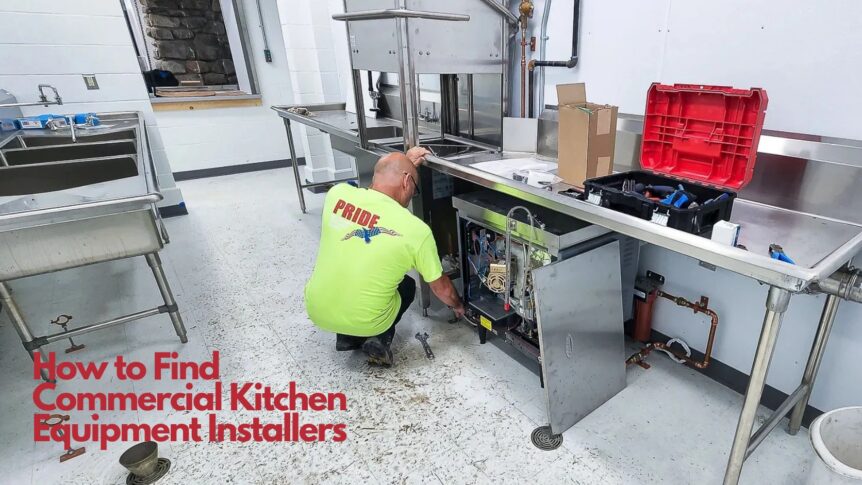
Start with a referral from the equipment manufacturer or dealer, then ask each installer about their experience with your specific model. Before you book, get a written quote that spells out who will move the equipment into place, connect it, and handle startup and testing.
Whether you’re replacing a dishwasher in a busy kitchen or outfitting a new cook line, those details help you compare quotes and spot work that needs to happen before delivery. Here’s where to find commercial kitchen equipment installers, what to ask before hiring, and how to prepare your site.
Where to find commercial kitchen equipment installers
Start with the equipment manufacturer. Give them the model number and installation address, and ask whether they recommend an installer in your area. If the equipment requires an authorized technician for startup, ask who can perform that work before you book the installation.
Trade directories such as the Commercial Food Equipment Service Association (CFESA) service locator can help you find additional candidates. You can also ask your equipment dealer or another foodservice operator who installed a similar unit. Before requesting a quote, confirm that the installer serves your location, has experience with your equipment, and can work within your delivery or opening schedule.
Key steps to vetting installers
Selecting the right installer impacts the lifespan and efficiency of your new commercial kitchen equipment. Look beyond the initial quote. Instead, focus on proven quality and technical expertise.
1. Prioritize technical certifications
Always verify the technicians’ training. For instance, look for certifications from industry groups. The Commercial Food Equipment Service Association (CFESA) provides excellent training standards. Certification proves their technical knowledge. Furthermore, these professionals understand complex utility requirements. This includes gas lines, ventilation, and electrical connections.
2. Verify insurance and licensing
Any reputable installer carries full liability insurance. This protects your business against unforeseen damages. In addition, check their local licensing. They must meet all state and municipal regulations. Pride Commercial Appliance Service has operated since 2004. We fully comply with all local regulatory requirements.
3. Review installation expertise
Ask about the specific types of equipment they install. Are they experienced with specialized commercial kitchen equipment? This could include complex HVAC tie-ins for Type 1 hoods. It also covers refrigerant line installation for walk-in freezers. Consequently, expertise with your specific unit type is non-negotiable.
What to compare in an installation quote
Two quotes can cover different work even when they’re for the same piece of equipment. Ask each installer to list what’s included, what costs extra, and which tasks your team or another contractor needs to arrange.
| Item | What to confirm |
|---|---|
| Delivery and placement | Does the quote include receiving the equipment, moving it into the kitchen, unpacking it, and setting it in place? |
| Utility connections | Which existing gas, electrical, water, or drain connections will the installer use? Who handles any upgrades needed before installation? |
| Permits and inspections | If the project requires permits or inspections, who coordinates them and are the fees included? |
| Startup and testing | Who tests the unit, checks that it operates as expected, and shows your staff how to use it? Is manufacturer-authorized startup included if required? |
| Old equipment removal | Does the quote cover disconnecting, moving, and disposing of the old unit? |
For example, a quote to replace a commercial dishwasher may include connecting it to the existing water and drain lines. If the new model needs a different electrical connection, find out who will arrange that work and whether it must be completed before installation day.
The importance of proper installation
Improper installation causes immediate problems. It can void manufacturer warranties. Moreover, it often leads to premature failure.
- Efficiency: A poorly leveled oven bakes unevenly. This wastes energy.
- Safety: Gas lines must have zero leaks. Ventilation must meet fire codes.
- Longevity: Correct electrical wiring prevents surges. This protects your equipment’s internal components.
What to confirm before the equipment arrives
Share the model number, manufacturer’s installation specifications, and expected delivery date with your installer. A pre-installation site survey can help identify problems with access, available space, or utility connections while there’s still time to address them.
- Check the delivery route. Confirm the equipment can pass through loading doors, hallways, and tight corners. If it needs to go upstairs or downstairs, tell the installer in advance.
- Check the installation space. Confirm that the unit fits in its final position with room for doors to open and for technicians to access it for service.
- Review utility requirements. Ask the installer to compare the new unit’s requirements with the site’s existing connections and identify any work that needs to happen first.
- Plan around kitchen operations. If you’re replacing a unit in an active kitchen, agree on when it can be taken out of service, when the replacement will arrive, and when your staff can expect to use it.
Frequently asked questions
The duration varies greatly. Simple ranges take a few hours. Complex walk-in freezers require several days.
You often need electrical, plumbing, or building permits. Therefore, you should check with your local jurisdiction first.
Many reputable services, including ours, offer removal and disposal. Thus, this streamlines the entire replacement process.
Installation is the full setup, leveling, and securing of the unit. Hookup is just connecting the utilities (gas, water, power).
It depends on the manufacturer and model. Check the installation instructions and warranty terms before booking. If authorized startup is required, ask who will perform it, whether it’s included in the quote, and what documentation you’ll receive afterward.
Ask the installer to identify what needs to change and specify who will do the work in the written quote. Depending on the project, you may need a separate qualified trade for a new electrical circuit, gas line, or plumbing connection. Confirm who coordinates that work and when it must be finished so the equipment can be installed on schedule.
For professional installation of your commercial kitchen equipment, trust Pride Commercial Appliance Service.