
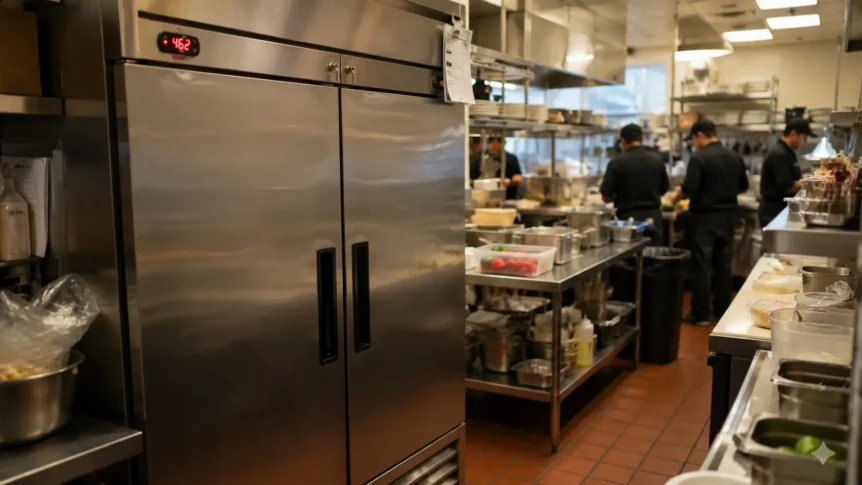
The line is stacked, tickets keep printing, and someone finally checks the reach-in and says the four words no kitchen wants to hear: it’s not cold enough. Not off. Not silent. Just running warm, 46°F instead of 38°F, humming along like nothing’s wrong.
A reach-in refrigerator that runs but won’t hold temperature is almost always one of four problems: dirty condenser coils, a door gasket that’s stopped sealing, a failing evaporator fan, or a compressor and refrigerant charge wearing out. The first two are often a same-day fix. The last two call for a technician.
What’s reassuring is that a fully dead unit is rare. The compressor is usually still cycling on schedule, the light’s still on, nothing looks broken. It’s just losing ground a little at a time, and that slow decline is actually the useful part. It gives you a window to catch the real cause before anything in that cabinet sits in the danger zone long enough to matter.
Start with the condenser coils
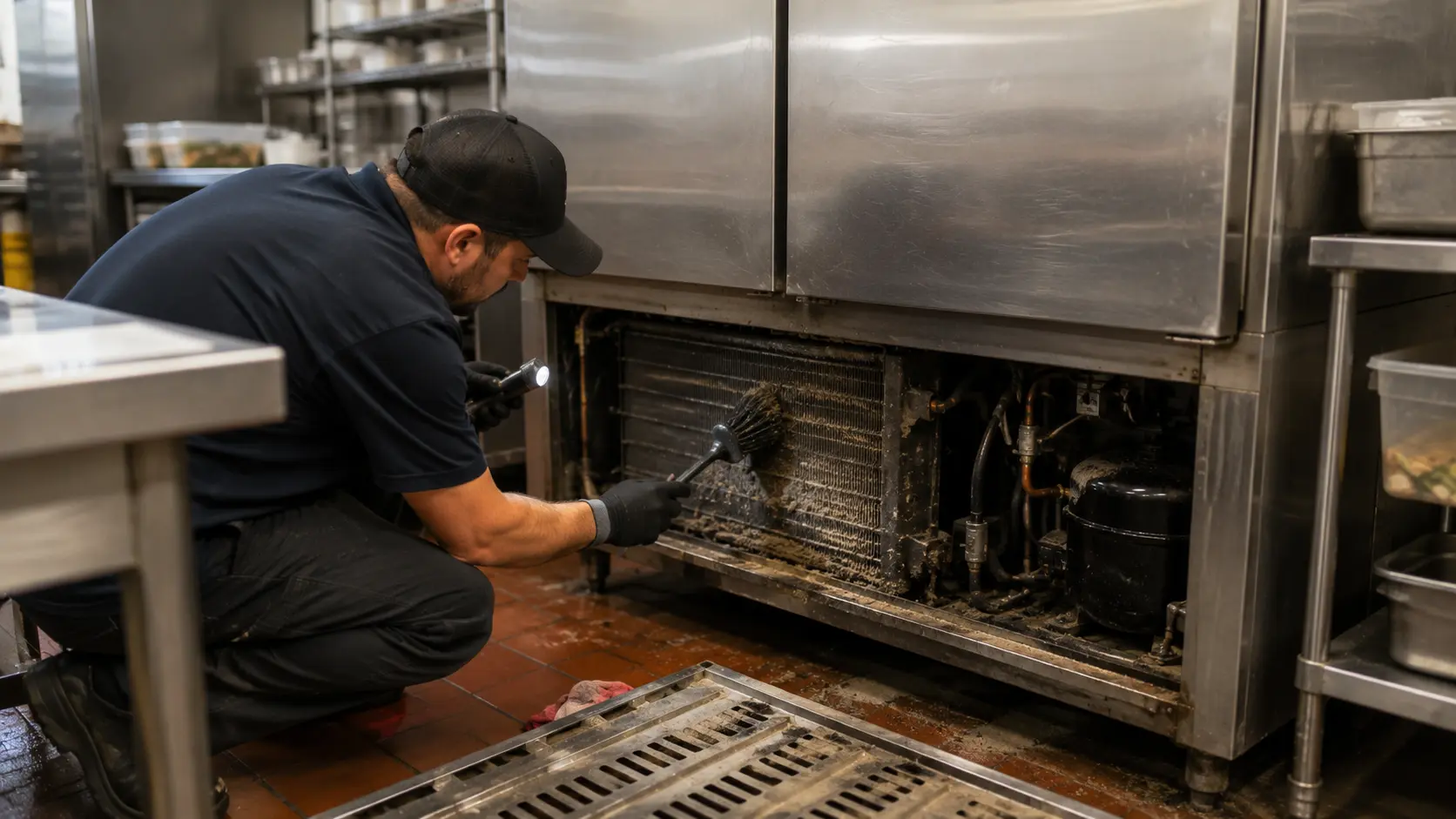
Dirty condenser coils are the single most common reason a commercial reach-in stops holding temperature, and in a working kitchen, they get dirty fast. Grease, flour dust, and general kitchen exhaust settle on the coils and stop them from releasing heat the way they’re built to. The compressor keeps running anyway. It’s just fighting a battle it can’t win.
You’ll usually notice it before a technician does. The unit runs constantly, the sides feel warm to the touch, and someone on the line mentions the compressor never seems to shut off. On units where the condenser sits low, near the floor, that buildup happens even faster because that’s exactly where flour and grease end up.
Overstocked shelves cause a similar problem. Push food too far back against the vents, and you block the cold air before it ever reaches the front of the cabinet.
This is also the one prevention step your own team can handle. A quick coil brush-down between deliveries, whoever’s on prep that week, does more to prevent an emergency call than almost anything else on this list.
Are the door gaskets still sealing?
If the coils are clean and the unit is still struggling, check the door next. A worn gasket lets warm kitchen air leak in every time the door closes, and on a reach-in opened dozens of times a shift, that adds up fast.
The dollar-bill test still works. Close a bill in the door and pull it out. If it slides free without resistance, the seal isn’t holding, and the compressor has been quietly working overtime to make up for it.
Why is cooling uneven inside the cabinet?
When part of the cabinet is cold, and another part isn’t, that’s a different problem, and it usually points to the evaporator fan rather than the compressor.
The fan pushes cold air around the inside of the cabinet. When it slows down or fails, cold air pools near the coil instead of reaching every shelf. You’ll see a top shelf that’s ice cold next to a bottom shelf sitting closer to the danger zone than it should, typically above the 35°F to 38°F range most commercial units are set to hold. On glass-door units, frost building up on the back wall is usually the giveaway before anyone notices the temperature swing on a gauge.
When it’s the compressor or a refrigerant leak
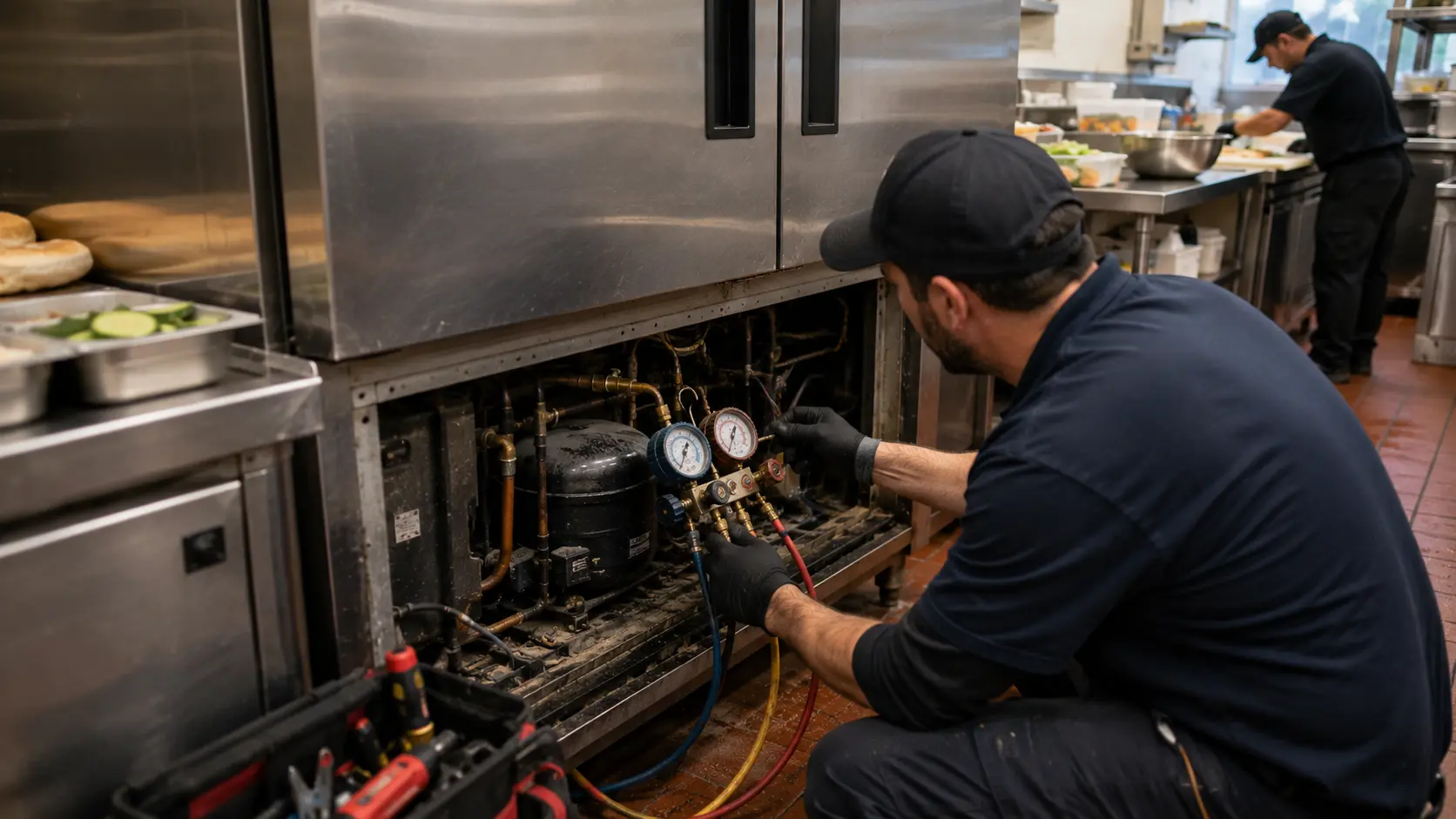
Two causes deserve their own mention because this is where DIY stops.
A failing compressor sounds like clicking every few minutes as it tries and fails to start, or complete silence where there should be a hum. Left alone, a compressor working overtime against dirty coils or low refrigerant tends to fail sooner rather than later, which turns a repair visit into a compressor replacement.
A refrigerant leak looks different: performance that’s fine on Monday and noticeably worse by Thursday, with nothing obvious that changed. The charge in a sealed system doesn’t just run low on its own. If it’s dropping, there’s a leak somewhere, and topping it off without finding the leak just means doing it again in a few weeks.
Both require someone who can measure system pressures and properly test the sealed refrigeration circuit. It’s not something to troubleshoot between tickets. If either sounds familiar, that’s the cue to stop guessing and call for refrigeration failure response before the loss adds up.
Should you repair it or replace it?
Most reach-ins are worth fixing. Age, how many repairs it’s already had, and whether parts are still available for the model matter more than the brand on the door, whether it’s a True unit or something else entirely.
Pride doesn’t sell equipment, only time and service, so a repair-vs-replace call isn’t shaped by what’s easier to sell. If a unit gets flagged for replacement, it’s usually because parts are discontinued, the compressor has failed more than once, or the repair cost is approaching what a new unit would cost. Short of that, it gets fixed.
What to tell the technician when you call
A few details up front save real time on the visit:
- The make and model, usually on a plate inside the door
- The current temperature versus what it’s set to
- Whether it happened suddenly or crept up over a few days
- Any unusual noise, or the absence of one where there should be some
- Whether more than one unit on the same line is affected
- That last one matters more than people expect. When two coolers on the same run are both warm, the problem is often shared equipment, not two separate failures.
How long does it take to cool back down after a repair?
A reach-in usually needs a few hours to settle back to a safe holding temperature once the actual problem is fixed. That window stretches out if the unit gets reloaded with warm product right away, since the compressor has to fight the load on top of catching up on temperature. Give it time to stabilize before restocking it fully.
Pride Commercial Appliance Service has repaired hot-side and cold-side equipment in kitchens across Rochester, Syracuse, and Buffalo since 2004, with 24/7 availability and factory-trained specialists authorized by more than 70 manufacturers. We handle the kitchen equipment lifecycle from diagnosis through repair, and our job is to keep kitchens running, not sell equipment nobody asked for.